Product ID: 00060
Description
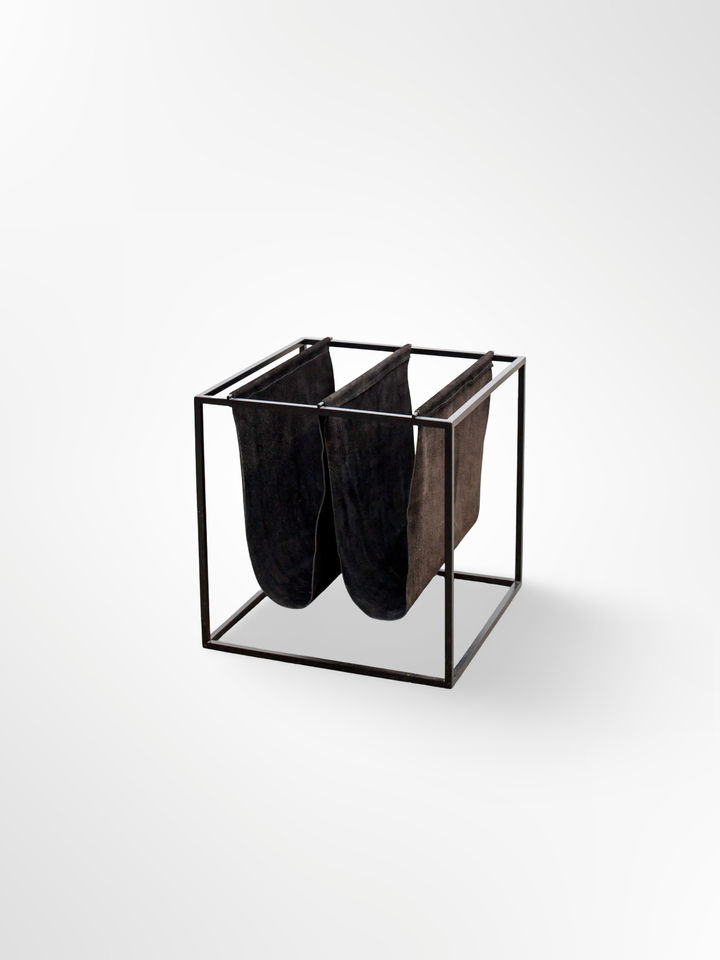
"Leque" magazine holder, available in a variety of FSC-certified woods. Flaps can be made to face either side. Part of the Etel collection.
About Gregori Warchavchic
Gregori Warchavchic was one of the key forces behind modernist architecture in Brazil. He began designing houses in the late 1920’s, including a notorious one that showcased the artworks of the most important representatives of the Brazilian modernist movement like Lasar Segall, Tarsila do Amaral, Victor Brecheret, Anita Malfatti and Di Canvalcanti. Due to the lack of options compatible with a new architecture, Warchavchik soon became involved with designing furniture for the houses he created. Geometric lines and formally balanced designs are all qualities of his furniture pieces. The re-issuing of his pieces nowadays has confirmed the enduring nature of their design.
Born in Ukraine, Warchavchic went on to study architecture in Italy and worked in Florence before arriving in Brazil in 1923. The architect was clearly influenced by the post-war European atmosphere; his work incorporated the new styles that appeared in Walter Gropius’ work and his Bauhaus – a laboratory of ideas and experiments on the relationship between industry, architecture and design. His style also owed much to the work of Le Corbusier, Mies Van der Rohe, Italian and Dutch rationalists. The period was one of search for a language that would synthesize advancements of industry with the evolution of design. The artist arrived in Brazil in the midst of the Modernist movement, in the aftermath of the pivotal moment known as “Week of 22”, which assured receptivity to the European concepts Warchavchic carried with him. His anti-academic approach was put forth in his “Manifesto on Modern Architecture”, published in 1925 in a Rio de Janeiro newspaper.
Wood
Colour shown is indicative only and may not be totally accurate representation off finish due to variations in system/s used and/or display settings.
Scientific name
Ocotea Porosia, Lauraceae
Common names
Imbuia, also known as Canela-Imbuia, Imbuia-Amarela, Imbuia-Brazina, Imbuia-Clara, imbuia-Parda, Imbuia Rajada, Imbuia Preta, Umbuia and Brazilian Walnut. Ocotea catharinesis (canela-preta) and Cinnamomum Vesiculosm, are two species from southern Brazil that present similar characteristics.
Description
Imbuia trees will normally reach a height ranging from 15 to 40 meters and will have a diameter of 50 to 150 centimeters. The tree trunk is has a rough texture and becomes twisted when growing, because of that the canopy ends up spreading and widening.
Characteristics
The heart of the wood can vary considerably, ranging from yellowish light-gray to a reddish dark-gray. It is also normal to find a presence of darker veins on the trunk, being either wavy or parallel. However, the grain is normally straight and in some rare occasions it may become wavy. Imbuia has an irregular lustrous smooth surface, a pleasant odor and a bitter, astringent taste.
Scientific name
Ocotea Porosia, Lauraceae
Common names
Imbuia, also known as Canela-Imbuia, Imbuia-Amarela, Imbuia-Brazina, Imbuia-Clara, imbuia-Parda, Imbuia Rajada, Imbuia Preta, Umbuia and Brazilian Walnut. Ocotea catharinesis (canela-preta) and Cinnamomum Vesiculosm, are two species from southern Brazil that present similar characteristics
Description
Imbuia trees will normally reach a height ranging from 15 to 40 meters and will have a diameter of 50 to 150 centimeters. The tree trunk is has a rough texture and becomes twisted when growing, because of that the canopy ends up spreading and widening.
Characteristics
The heart of the wood can vary considerably, ranging from yellowish light-gray to a reddish dark-gray. It is also normal to find a presence of darker veins on the trunk, being either wavy or parallel. However, the grain is normally straight and in some rare occasions it may become wavy. Imbuia has an irregular lustrous smooth surface, a pleasant odor and a bitter, astringent taste.
Scientific name
Ocotea Porosia, Lauraceae
Common names
Imbuia, also known as Canela-Imbuia, Imbuia-Amarela, Imbuia-Brazina, Imbuia-Clara, imbuia-Parda, Imbuia Rajada, Imbuia Preta, Umbuia and Brazilian Walnut. Ocotea catharinesis (canela-preta) and Cinnamomum Vesiculosm, are two species from southern Brazil that present similar characteristics.
Description
Imbuia trees will normally reach a height ranging from 15 to 40 meters and will have a diameter of 50 to 150 centimeters. The tree trunk is has a rough texture and becomes twisted when growing, because of that the canopy ends up spreading and widening.
Characteristics
The heart of the wood can vary considerably, ranging from yellowish light-gray to a reddish dark-gray. It is also normal to find a presence of darker veins on the trunk, being either wavy or parallel. However, the grain is normally straight and in some rare occasions it may become wavy. Imbuia has an irregular lustrous smooth surface, a pleasant odor and a bitter, astringent taste.
Scientific name
Ocotea Porosia, Lauraceae
Common names
Imbuia, also known as Canela-Imbuia, Imbuia-Amarela, Imbuia-Brazina, Imbuia-Clara, imbuia-Parda, Imbuia Rajada, Imbuia Preta, Umbuia and Brazilian Walnut. Ocotea catharinesis (canela-preta) and Cinnamomum Vesiculosm, are two species from southern Brazil that present similar characteristics.
Description
Imbuia trees will normally reach a height ranging from 15 to 40 meters and will have a diameter of 50 to 150 centimeters. The tree trunk is has a rough texture and becomes twisted when growing, because of that the canopy ends up spreading and widening.
Characteristics
The heart of the wood can vary considerably, ranging from yellowish light-gray to a reddish dark-gray. It is also normal to find a presence of darker veins on the trunk, being either wavy or parallel. However, the grain is normally straight and in some rare occasions it may become wavy. Imbuia has an irregular lustrous smooth surface, a pleasant odor and a bitter, astringent taste.
Scientific name
Bowdichia spp. Leguminosae ou Diplotropis spp. Legumionsae
Common names
Sucupira-parda, Sapupira, Sucupira-do-igapó, Cutiúba, Sapupira-da-mata, Brazilian Chestnut.
Description
In its natural habitat, the sucupira tree can reach a height of 45 meters and a diameter of 120 centimeters. However, in groves, where it's mostly cultivated, the sucupira tree has a smaller height. The bark has a grayish color , almost smooth-like texture with narrow vertical fissures.
Characteristics
After the tree is recently cut, the sucupira's heartwood has a natural chocolate like color, after the heartwood dies the color will change into dark brown. Narrow and grayish sapwood is also found. The texture is somewhere in between medium and rough, it is common to find irregular and wavy grains. The wood surface is irregularly glossy, with an interwoven and fibrous aspect. It is slightly rough to the touch and has no noticeable smell or taste.
Scientific name
Codria goeldiana, Boraginaceae
Common names
Freijó, Frei-Jorge, Louro-pardo, Louro-amarelo and Louro-da-serra, Freijó-branco, Freijó-preto, Freijó-rajado, Freijó-verdadeiro and Cordia preta.
Description
Freijó consists of a straight almost perfectly cylindrical trunk with a commercial height of 7 to 26 meters and diameter from 45 to 61 centimeters. Although for commercial purposes it will not surpass 26 meters, in areas of optimum growth, the Freijó tree can reach up to 40 meters in height and 90 centimeters in diameter.
Characteristics
The heartwood has a yellowish-gray or even a chestnut brown-hued light-grayy color, in either a uniform manner or with faint parallel darker stripes and on rare occasions a rosy tone can be found. The sapwood has a gray or grayish white color ranging from 1.5 to 5 centimeters. It is generally straight grained with a glossy surface that is moderately rough to the touch.
Scientific name
Codria goeldiana, Boraginaceae
Common names
Freijó, Frei-Jorge, Louro-pardo, Louro-amarelo and Louro-da-serra, Freijó-branco, Freijó-preto, Freijó-rajado, Freijó-verdadeiro and Cordia preta.
Description
Freijó consists of a straight almost perfectly cylindrical trunk with a commercial height of 7 to 26 meters and diameter from 45 to 61 centimeters. Although for commercial purposes it will not surpass 26 meters, in areas of optimum growth, the Freijó tree can reach up to 40 meters in height and 90 centimeters in diameter.
Characteristics
The heartwood has a yellowish-gray or even a chestnut brown-hued light-grayy color, in either a uniform manner or with faint parallel darker stripes and on rare occasions a rosy tone can be found. The sapwood has a gray or grayish white color ranging from 1.5 to 5 centimeters. It is generally straight grained with a glossy surface that is moderately rough to the touch.
Scientific name
Codria goeldiana, Boraginaceae
Common names
Freijó, Frei-Jorge, Louro-pardo, Louro-amarelo and Louro-da-serra, Freijó-branco, Freijó-preto, Freijó-rajado, Freijó-verdadeiro and Cordia preta.
Description
Freijó consists of a straight almost perfectly cylindrical trunk with a commercial height of 7 to 26 meters and diameter from 45 to 61 centimeters. Although for commercial purposes it will not surpass 26 meters, in areas of optimum growth, the Freijó tree can reach up to 40 meters in height and 90 centimeters in diameter.
Characteristics
The heartwood has a yellowish-gray or even a chestnut brown-hued light-grayy color, in either a uniform manner or with faint parallel darker stripes and on rare occasions a rosy tone can be found. The sapwood has a gray or grayish white color ranging from 1.5 to 5 centimeters. It is generally straight grained with a glossy surface that is moderately rough to the touch.
Scientific name
Codria goeldiana, Boraginaceae
Common names
Freijó, Frei-Jorge, Louro-pardo, Louro-amarelo and Louro-da-serra, Freijó-branco, Freijó-preto, Freijó-rajado, Freijó-verdadeiro and Cordia preta.
Description
Freijó consists of a straight almost perfectly cylindrical trunk with a commercial height of 7 to 26 meters and diameter from 45 to 61 centimeters. Although for commercial purposes it will not surpass 26 meters, in areas of optimum growth, the Freijó tree can reach up to 40 meters in height and 90 centimeters in diameter.
Characteristics
The heartwood has a yellowish-gray or even a chestnut brown-hued light-grayy color, in either a uniform manner or with faint parallel darker stripes and on rare occasions a rosy tone can be found. The sapwood has a gray or grayish white color ranging from 1.5 to 5 centimeters. It is generally straight grained with a glossy surface that is moderately rough to the touch.
Scientific name
Cedrela odorata, Meliacea
Common names
Cedro, Cedro Vermelho, Red Cedar, Cedar, Cedre Acajou, Ceder, Cedro Rosa, Cedro Cobrado, Cedro Branco, Cedro Amargo, Cedro Macho.
Description
Cedar is a lightweight wood with the heartwood having a color that varies from an intense dark rosy beige or a rosy light chestnut to a reddish chestnut. The surface is glossy with golden highlights, the texture is rough and the grains are mostly straight or may have a slightly wavy pattern.
Scientific name
Cedrela odorata, Meliacea
Common names
Cedro, Cedro Vermelho, Red Cedar, Cedar, Cedre Acajou, Ceder, Cedro Rosa, Cedro Cobrado, Cedro Branco, Cedro Amargo, Cedro Macho.
Description
Cedar is a lightweight wood with the heartwood having a color that varies from an intense dark rosy beige or a rosy light chestnut to a reddish chestnut. The surface is glossy with golden highlights, the texture is rough and the grains are mostly straight or may have a slightly wavy pattern.
Scientific name
Cedrela odorata, Meliacea
Common names
Cedro, Cedro Vermelho, Red Cedar, Cedar, Cedre Acajou, Ceder, Cedro Rosa, Cedro Cobrado, Cedro Branco, Cedro Amargo, Cedro Macho.
Description
Cedar is a lightweight wood with the heartwood having a color that varies from an intense dark rosy beige or a rosy light chestnut to a reddish chestnut. The surface is glossy with golden highlights, the texture is rough and the grains are mostly straight or may have a slightly wavy pattern.
Scientific name
Hymenolobium spp. Leguminosae
Common names
Angelim, Angelim-Pedra, Angelim-Rosa, Angelim-Grande, Angelim-do-Pará, Muirarema.
Characteristics
Hardwood with a clear reddish chestnut color, irregular grain. Fibrous trunk with a rough texture, indistinct smell and taste.
Dimensions
previous product