Product ID: 00275
Description
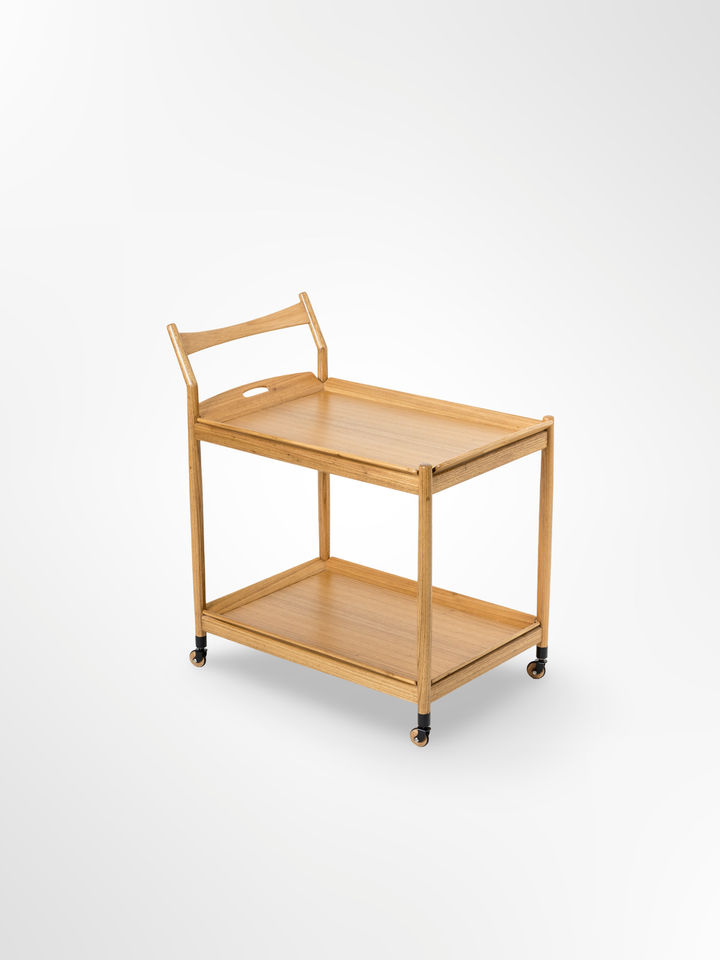
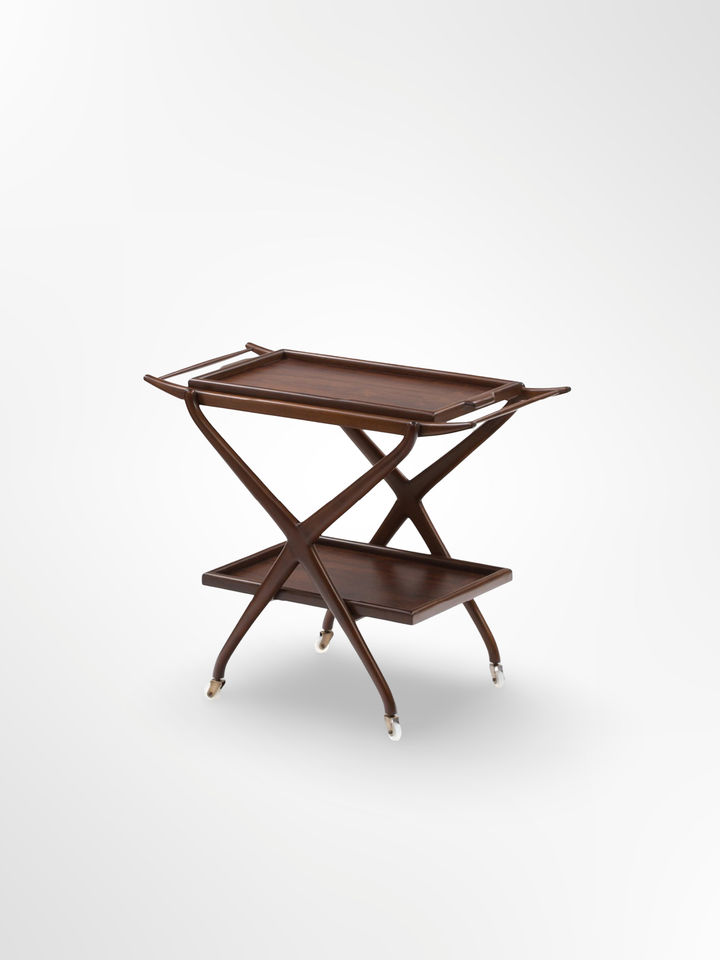
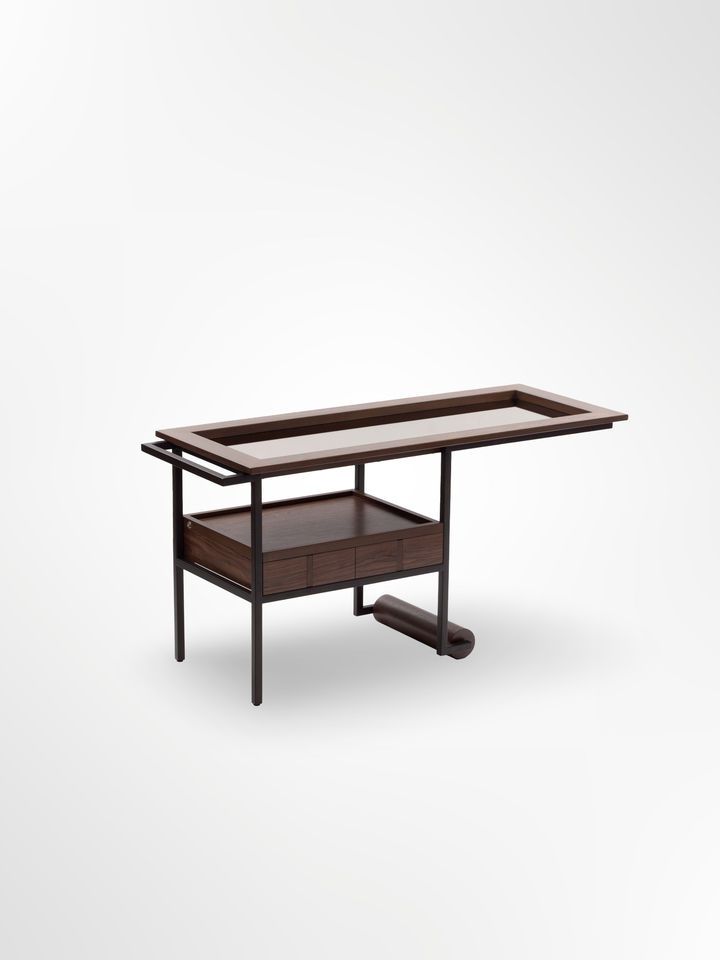
"JZ" tea trolley available in a variety of FSC-certified woods and steel. Produced by Etel, in Brazil.
About Jorge Zalszupin
The Polish born Jorge Zalszupin moved to Brazil after World War II, where he found an opportunity to develop his extremely sensual, modern architecture. A desire to rebuild a new post-war world and a wave of development in Brazil proved an ideal time for this creative atmosphere to flourish. Graceful lines, strong use of local woods and a combination of impeccable woodworking and classical detailing mark Zalszupin’s furniture.
Zalzsupin was one of the founders of the brand L’Atelier, a design collective comprised of architects, engineers, craftsmen and a full-scale team of professionals that did everything from researching materials to the finalizing the product. With the birth of the utopic Brasilia during the 1960’s and 1970’s, virtually no public building was left unmarked by the brand’s creations. L’Atelier’s designs stand as benchmarks of modernism to this day.
Wood
Colour shown is indicative only and may not be totally accurate representation off finish due to variations in system/s used and/or display settings.
Scientific name
Ocotea Porosia, Lauraceae
Common names
Imbuia, also known as Canela-Imbuia, Imbuia-Amarela, Imbuia-Brazina, Imbuia-Clara, imbuia-Parda, Imbuia Rajada, Imbuia Preta, Umbuia and Brazilian Walnut. Ocotea catharinesis (canela-preta) and Cinnamomum Vesiculosm, are two species from southern Brazil that present similar characteristics.
Description
Imbuia trees will normally reach a height ranging from 15 to 40 meters and will have a diameter of 50 to 150 centimeters. The tree trunk is has a rough texture and becomes twisted when growing, because of that the canopy ends up spreading and widening.
Characteristics
The heart of the wood can vary considerably, ranging from yellowish light-gray to a reddish dark-gray. It is also normal to find a presence of darker veins on the trunk, being either wavy or parallel. However, the grain is normally straight and in some rare occasions it may become wavy. Imbuia has an irregular lustrous smooth surface, a pleasant odor and a bitter, astringent taste.
Scientific name
Ocotea Porosia, Lauraceae
Common names
Imbuia, also known as Canela-Imbuia, Imbuia-Amarela, Imbuia-Brazina, Imbuia-Clara, imbuia-Parda, Imbuia Rajada, Imbuia Preta, Umbuia and Brazilian Walnut. Ocotea catharinesis (canela-preta) and Cinnamomum Vesiculosm, are two species from southern Brazil that present similar characteristics
Description
Imbuia trees will normally reach a height ranging from 15 to 40 meters and will have a diameter of 50 to 150 centimeters. The tree trunk is has a rough texture and becomes twisted when growing, because of that the canopy ends up spreading and widening.
Characteristics
The heart of the wood can vary considerably, ranging from yellowish light-gray to a reddish dark-gray. It is also normal to find a presence of darker veins on the trunk, being either wavy or parallel. However, the grain is normally straight and in some rare occasions it may become wavy. Imbuia has an irregular lustrous smooth surface, a pleasant odor and a bitter, astringent taste.
Scientific name
Ocotea Porosia, Lauraceae
Common names
Imbuia, also known as Canela-Imbuia, Imbuia-Amarela, Imbuia-Brazina, Imbuia-Clara, imbuia-Parda, Imbuia Rajada, Imbuia Preta, Umbuia and Brazilian Walnut. Ocotea catharinesis (canela-preta) and Cinnamomum Vesiculosm, are two species from southern Brazil that present similar characteristics.
Description
Imbuia trees will normally reach a height ranging from 15 to 40 meters and will have a diameter of 50 to 150 centimeters. The tree trunk is has a rough texture and becomes twisted when growing, because of that the canopy ends up spreading and widening.
Characteristics
The heart of the wood can vary considerably, ranging from yellowish light-gray to a reddish dark-gray. It is also normal to find a presence of darker veins on the trunk, being either wavy or parallel. However, the grain is normally straight and in some rare occasions it may become wavy. Imbuia has an irregular lustrous smooth surface, a pleasant odor and a bitter, astringent taste.
Scientific name
Ocotea Porosia, Lauraceae
Common names
Imbuia, also known as Canela-Imbuia, Imbuia-Amarela, Imbuia-Brazina, Imbuia-Clara, imbuia-Parda, Imbuia Rajada, Imbuia Preta, Umbuia and Brazilian Walnut. Ocotea catharinesis (canela-preta) and Cinnamomum Vesiculosm, are two species from southern Brazil that present similar characteristics.
Description
Imbuia trees will normally reach a height ranging from 15 to 40 meters and will have a diameter of 50 to 150 centimeters. The tree trunk is has a rough texture and becomes twisted when growing, because of that the canopy ends up spreading and widening.
Characteristics
The heart of the wood can vary considerably, ranging from yellowish light-gray to a reddish dark-gray. It is also normal to find a presence of darker veins on the trunk, being either wavy or parallel. However, the grain is normally straight and in some rare occasions it may become wavy. Imbuia has an irregular lustrous smooth surface, a pleasant odor and a bitter, astringent taste.
Scientific name
Bowdichia spp. Leguminosae ou Diplotropis spp. Legumionsae
Common names
Sucupira-parda, Sapupira, Sucupira-do-igapó, Cutiúba, Sapupira-da-mata, Brazilian Chestnut.
Description
In its natural habitat, the sucupira tree can reach a height of 45 meters and a diameter of 120 centimeters. However, in groves, where it's mostly cultivated, the sucupira tree has a smaller height. The bark has a grayish color , almost smooth-like texture with narrow vertical fissures.
Characteristics
Once the tree is recently cut, the sucupira's heartwood has a natural chocolate like color, after the heartwood dies the color will change into dark brown. Narrow and grayish sapwood is also found. The texture is somewhere in between medium and rough, it is common to find irregular and wavy grains. The wood surface is irregularly glossy, with an interwoven and fibrous aspect. It is slightly rough to the touch and has no noticeable smell or taste.
Scientific name
Bowdichia spp. Leguminosae ou Diplotropis spp. Legumionsae
Common names
Sucupira-parda, Sapupira, Sucupira-do-igapó, Cutiúba, Sapupira-da-mata, Brazilian Chestnut.
Description
In its natural habitat, the sucupira tree can reach a height of 45 meters and a diameter of 120 centimeters. However, in groves, where it's mostly cultivated, the sucupira tree has a smaller height. The bark has a grayish color , almost smooth-like texture with narrow vertical fissures.
Characteristics
Once the tree is recently cut, the sucupira's heartwood has a natural chocolate like color, after the heartwood dies the color will change into dark brown. Narrow and grayish sapwood is also found. The texture is somewhere in between medium and rough, it is common to find irregular and wavy grains. The wood surface is irregularly glossy, with an interwoven and fibrous aspect. It is slightly rough to the touch and has no noticeable smell or taste.
Scientific name
Bowdichia spp. Leguminosae ou Diplotropis spp. Legumionsae
Common names
Sucupira-parda, Sapupira, Sucupira-do-igapó, Cutiúba, Sapupira-da-mata, Brazilian Chestnut.
Description
In its natural habitat, the sucupira tree can reach a height of 45 meters and a diameter of 120 centimeters. However, in groves, where it's mostly cultivated, the sucupira tree has a smaller height. The bark has a grayish color , almost smooth-like texture with narrow vertical fissures.
Characteristics
After the tree is recently cut, the sucupira's heartwood has a natural chocolate like color, after the heartwood dies the color will change into dark brown. Narrow and grayish sapwood is also found. The texture is somewhere in between medium and rough, it is common to find irregular and wavy grains. The wood surface is irregularly glossy, with an interwoven and fibrous aspect. It is slightly rough to the touch and has no noticeable smell or taste.
Dimensions
previous product